
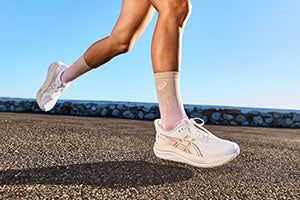
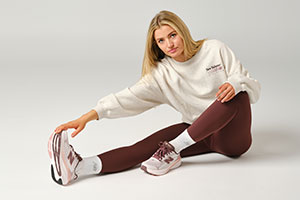




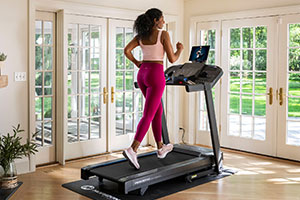


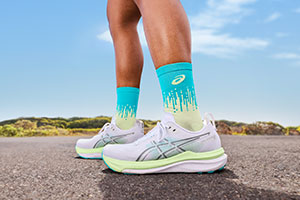
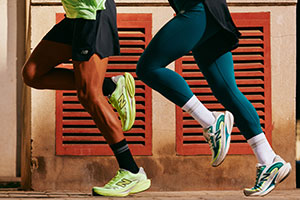







All of these shoes seem to get great reviews, but what's the difference between them?
ASICS' Blast range has become known for lightweight cushioning, energetic rides, and running shoes that can handle more than one type of session.
But with the Novablast 6, Sonicblast 2 and Superblast 3 all sitting within the wider Blast family, choosing between them isn't necessarily straightforward.
All three are neutral running shoes built around an energetic feel, but they're designed with different runners and training sessions in mind.
The Novablast 6 is the approachable all-round daily trainer. The Sonicblast 2 adds a plate and places a greater emphasis on speed and forward propulsion. The Superblast 3 combines premium foam, high cushioning, and a lightweight build to cover everything from recovery runs to long-distance and faster training.
So, which Blast model is right for you?
What Is the ASICS Blast Range?
The Blast family is built around one central idea: making running feel more energetic and fun.
Rather than creating three shoes that do the same job, ASICS uses different foam combinations, geometries and technologies to give each model its own purpose.
The easiest way to separate them is:
- Novablast 6: Versatile daily trainer
- Sonicblast 2: Speed-focused daily trainer
- Superblast 3: Premium, highly cushioned super trainer
There's plenty of crossover between them, particularly when it comes to everyday running and faster sessions. The biggest differences become clearer when you look at how each shoe creates its energetic ride.
ASICS Novablast 6: The Everyday All-Rounder
If you want one shoe that can cover most of your weekly running without becoming overly specialised, the ASICS Novablast 6 is the natural starting point.
The Novablast has traditionally been ASICS' bouncy neutral daily trainer, and the sixth version continues that approach.
Its main midsole uses FF BLAST MAX cushioning, providing the soft and energetic feeling the Novablast line is known for. The Novablast 6 also introduces an FF TURBO SQUARED trampoline pod through the forefoot, designed to increase the bounce as you move through toe-off.
This creates a shoe that feels comfortable enough for easier running but still has enough responsiveness when you decide to increase the pace.
What Is the Novablast 6 Best For?
The Novablast 6 works particularly well for:
- Daily running
- Easy and steady runs
- Moderate tempo sessions
- Short-to-medium distance running
- Runners who want one versatile training shoe
It's the least specialised of the three - and that's one of its strengths.
You don't necessarily need to be training for a race or following a structured running program to benefit from it. If you run a few times each week and want something cushioned, responsive and adaptable, the Novablast 6 covers a broad range of sessions.
ASICS Sonicblast 2: The Speed-Focused Option
The ASICS Sonicblast 2 takes the energetic Blast concept and pushes it more towards faster running.
The major difference is the forked ASTROPLATE (a plastic formulation) running through the shoe.
Unlike the Novablast 6, which creates its bounce primarily through foam and geometry, the Sonicblast 2 uses its plate alongside the cushioning to help create greater forward propulsion.
Its dual-layer midsole combines FF TURBO SQUARED with FF BLAST MAX foam. The softer, energetic foams provide cushioning while the ASTROPLATE helps create a quicker transition through each stride.
For the second generation, ASICS redesigned the forked plate and extended the FF TURBO SQUARED foam further through the midsole and into the trampoline pod.
The result is a shoe designed to feel noticeably more performance-focused.
What Is the Sonicblast 2 Best For?
The Sonicblast 2 makes sense for:
- Tempo runs
- Interval sessions
- Faster training days
- Progression runs
- Runners wanting a plated trainer without moving straight into a racing shoe
It can still handle everyday kilometres, but speed is where its design starts to separate itself from the Novablast.
If your weekly training includes dedicated faster sessions, the Sonicblast 2 offers more mechanical assistance and propulsion than the traditional daily-trainer setup of the Novablast 6.
ASICS Superblast 3: The Premium Super Trainer
The ASICS Superblast 3 sits at the top of the three-shoe comparison.
What makes the Superblast interesting is how much performance ASICS has packed into it without adding a traditional plate.
The Superblast 3 introduces FF LEAP cushioning: a lightweight and highly energetic foam influenced by ASICS' METASPEED racing shoes - alongside FF BLAST PLUS.
It also uses a trampoline pod through the outsole to create additional energy through toe-off.
Despite its large amount of cushioning, the Superblast 3 weighs approximately 239 grams and has an 8mm heel-to-toe drop.
That combination of high cushioning, relatively low weight, and responsive foam gives it an unusually broad range of uses.
What Is the Superblast 3 Best For?
The Superblast 3 is particularly well suited to:
- Long runs
- Marathon training
- High weekly mileage
- Tempo sessions
- Steady running
- Recovery runs
- Runners who want one premium shoe capable of handling most sessions
This is where the Superblast earns its “super trainer” description.
It provides enough cushioning for high-volume training but remains light and responsive enough to pick up the pace.
Importantly, it achieves this without a carbon or traditional propulsion plate, which can make the ride feel more natural for runners who don't want the stiffness associated with plated footwear.
Novablast 6 vs Sonicblast 2: What's the Difference?
These two are probably the easiest to confuse because both can work as daily trainers.
The main distinction is how performance-focused you want your shoe to be.
The Novablast 6 uses FF BLAST MAX cushioning and an FF TURBO SQUARED forefoot pod to create an energetic ride without a plate.
The Sonicblast 2 adds its forked ASTROPLATE alongside full-length FF TURBO SQUARED and FF BLAST MAX cushioning.
That makes the Novablast the more traditional and versatile daily trainer, while the Sonicblast is designed to provide more propulsion when the pace increases.
Choose the Novablast 6 if everyday versatility matters most.
Consider the Sonicblast 2 if faster workouts make up a meaningful part of your training.
Sonicblast 2 vs Superblast 3: What's the Difference?
Both shoes sit on the more performance-oriented side of the Blast family, but they get there differently.
The Sonicblast 2 uses its ASTROPLATE to help drive the runner forwards, making it particularly well suited to structured speed sessions.
The Superblast 3 doesn't use a plate. Instead, it relies on premium FF LEAP foam, its high-stack geometry, and trampoline-inspired outsole design to create its responsive feeling.
The Superblast also places a greater emphasis on cushioning and long-distance versatility.
For someone doing intervals and tempo running regularly, the Sonicblast 2 makes a lot of sense.
For someone building towards a half marathon or marathon, completing long runs and still wanting enough responsiveness for faster sessions, the Superblast 3 offers the broader range.
Novablast 6 vs Superblast 3: Do You Need to Upgrade?
This comparison is less about one shoe being “better” and more about how much performance you actually need.
The Novablast 6 already provides a lightweight, cushioned, and responsive daily running experience.
For many runners, that's plenty.
The Superblast 3 takes that general idea further with more advanced cushioning, additional stack height, lower weight relative to the amount of cushioning provided, and greater long-distance capability.
If you're running casually or covering a mixture of shorter everyday sessions, the Novablast 6 can be the more straightforward option.
If you're accumulating larger weekly kilometres, training for longer races, or want a single premium trainer capable of comfortably handling long and fast sessions, that's where the Superblast 3 begins to justify its position.
Which ASICS Blast Running Shoe Should You Choose?
There isn't one Blast model that makes sense for everybody.
Think about what your typical running week actually looks like.
Choose the Novablast 6 if...
You want a versatile daily trainer that can comfortably handle easy runs, steady kilometres and the occasional faster session.
It's the most approachable all-rounder of the three.
Choose the Sonicblast 2 if...
Speed sessions are an important part of your training, and you want the additional propulsion of a plated shoe.
Its ASTROPLATE and dual-foam construction make it particularly suited to tempo running and faster workouts.
Choose the Superblast 3 if...
You want maximum versatility from a premium trainer, particularly if longer distances and higher weekly mileage are part of your routine.
Its FF LEAP cushioning provides the lightweight, energetic feeling needed for faster running, while its high level of cushioning makes it particularly capable over longer distances.
Do You Need More Than One Blast Model?
Not necessarily.
All three shoes have enough versatility to cover multiple types of running.
However, runners who enjoy rotating footwear could also use the differences between the models to build a training rotation.
For example, the Novablast 6 could handle most everyday kilometres while the Sonicblast 2 is saved for faster sessions.
Alternatively, the Superblast 3 could handle long and steady runs while the Sonicblast 2 takes care of dedicated speed work.
There's no requirement to build a shoe rotation, though. For many runners, choosing the model that best matches the majority of their training is the simpler option.
Superblast 3 vs Sonicblast 2 vs Novablast 6: The Final Difference
The easiest way to understand the three ASICS Blast models is to think about their primary purpose.
Novablast 6: the everyday option.
It's the versatile daily trainer designed to provide a comfortable and energetic ride across a wide range of normal running sessions.
Sonicblast 2: the speed option.
Its forked ASTROPLATE and dual-foam midsole place greater emphasis on propulsion and faster training.
Superblast 3: the premium all-round performance option.
Its lightweight FF LEAP cushioning and high-stack design allow it to handle long-distance running, high mileage, recovery days, and faster workouts without relying on a plate.
There's plenty of crossover between all three, so you shouldn't choose purely based on which model sits higher in the Blast family.
Instead, consider your normal distance, weekly mileage, how often you run quickly, and the type of underfoot feeling you prefer.
Explore the ASICS Novablast 6 range, ASICS Sonicblast running shoes and ASICS Superblast range at INTERSPORT Australia to find the Blast model that best suits your training.