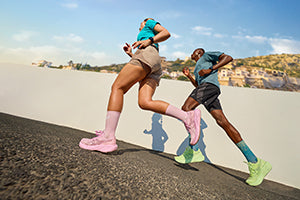
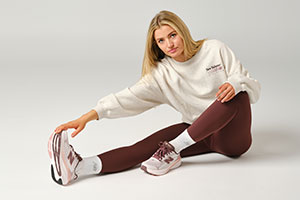












Your adrenaline is already pumping, and you still have months to go before crossing the finishing line. Marathon training is a gradual process that takes time, dedication and plenty of preparation. Finding a training plan that fits into your daily routine is the key to staying motivated and reaching your marathon goals.
To train for a race of any distance, start by creating a weekly training schedule. Prioritise your training during this time and do at least 4 weekly sessions that include the following:
- A moderately-paced run of a short to average distance
- One long run
- Relaxed jog
- Fast-paced training or tougher workouts to practise interval training, tempo runs, hills, circuit training and other exercises to increase your cardio capacity for long-haul runs
Mixing things up in your routine will help you improve your performance and reach your marathon goals.
KEY TIPS ON TRAINING FOR A 10KM RACE
Congratulations, you’ve committed, created a training schedule and now you’re on your way.
Following your training plan, it’s now time to up your base mileage by varying your exercises within your regular routine. Increasing your base mileage at a rate of 10 percent per week is a healthy and effective goal.
Training for a 10km race can be intense, so remember to integrate rest days or scale back your mileage once every couple of weeks to allow your body to recover. Cross-training activities such as yoga, hiking, biking, martial arts and swimming are great ways to stay active while giving your body some rest.
GEAR TO USE WHILE TRAINING:
TRAINERS:
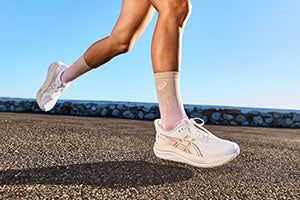
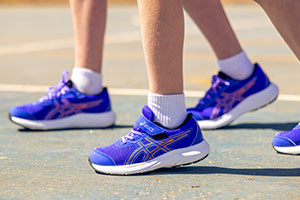
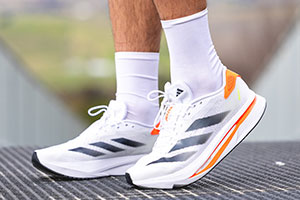
It is very important to use a good pair of trainers when going for a long run. There are many types of trainers available that could assist you on a long run, so it's important to seek out your local Intersport experts to find a pair that'll match your needs.
Before heading down to your local Intersport, here are some recommendations to give you an idea of what to expect:
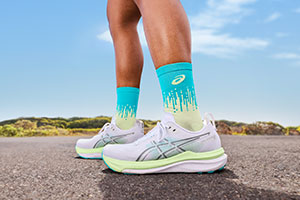
Asics Superblast 3:
The SUPERBLAST™ 3 delivers an ultra-light, springy ride with advanced cushioning inspired by racing technology for everyday runs. Its responsive midsole and trampoline-shaped outsole boost energy return, creating a powerful toe-off and a more energized stride. A fan favourite, this Asics legend pleases generation on generation. If you want energy and reliable bounce over your long runs, look no further than the Asics Superblast 3.
HOKA Bondi 9
The ultra-cushioned game-changer. One of the hardest-working shoes in the HOKA lineup, the Bondi 9 delivers peak plushness for everyday miles. Overhauled from top to bottom, HOKA has increased the stack height and added a new premium foam midsole to deliver that soft, resilient ride that’s become synonymous with the Bondi. Elevated with a 3D molded collar and structured knit upper with zonal breathability, this ultra-cushioned cult favourite has been finished with Durabrasion rubber to combat high wear zones. If you seek a predictable, soft and smooth ride, step your feet into the Bondi 9; it won't disappoint.
Nike Vomero Plus
A tall stack of responsive, light foam offers next-level cushioning. Take maximum cushioning to the next level with the Vomero Plus. It provides an ultra-comfortable ride for long runs thanks to a mountainous stack of full-length ZoomX foam, the most responsive foam in the industry. Plus, the engineered mesh upper is made of soft, breathable yarn for a comfortable fit. The aesthetics and comfort alone are enough to make this shoe a solid choice for a long run, so if you're after a pair that'll look good no matter the distance, Nike Vomero Plus is a no-brainer.
Asics Gel-Kayano 33
The GEL-KAYANO™ 33 is one of ASICS’ pinnacle running shoes for support and comfort. FLUIDSUPPORT™ technology adapts to your changing biomechanical needs throughout each stride, guiding key phases of the gait cycle while allowing natural foot motion for smooth, efficient transitions. This is one of the smoothest, softest Kayano's to date. If you're a long-time Kayano wearer or need a "helping hand" to help you land safely, the Asics Gel-Kayano 33 is your friend.
Lightweight, breathable clothing.
It is essential to wear clothes that do not cause excess heat to the body when exercising over long distances. The body can get warm and sweaty over long distances (or earlier depending on the person!), and it is important to wear breathable clothes, a lighter fabric, and a good fit to ensure you remain comfortable. Some people may prefer running tees; others may like running singlets or tanks. Whatever you find is comfortable is purely subjective; just make sure when you decide it's going to help you move efficiently.
Compression:
This one is purely optional; however, compression can help get the blood flowing and help assist the body recover from or resist injury. From sleeves, tops, pants and socks, Intersport has a fantastic range of compression to aid any part of your body in your long runs.
THINGS TO CONSIDER WHEN MOVING UP TO MARATHON TRAINING
Getting ready for your first marathon is all about conditioning and finding out what works best for you – and this takes time. For races between 5km and 20km, give yourself, on average, about 10 weeks of training time. For a full marathon, plan on slotting in about a year of preparation to be fully trained and prepared for long-haul runs. Running a few shorter races is also an excellent way to prepare physically and mentally for your first marathon.
Whether you’re going for a shorter race or a full marathon, following this easy-to-implement training plan will help you feel prepared to run your first marathon with confidence!